
Content of this Article
ToggleSouls of Guinea-Bissau
Children are the soul of a people, of a country, and of a planet. Without them, there is no joy, no hope, and no future. não há futuro.
Na Guiné-Bissau, a inocência e a alma genuína das crianças são postas em causa todos os dias. Faltam condições básicas. Faltam cuidados de saúde. Faltam alimentos. O lixo acumula-se nas ruas, a céu aberto. E quem tem o poder de mudar esta dura realidade… parece simplesmente não querer saber.
How can someone who says they love their country allow “their” children to go hungry? Kids living with bloated bellies from malnutrition and eyes drained from so much pain. How is that normal? It’s not. It shouldn’t be.
It’s a reality that makes me angry, that moves me, and that breaks my heart. Because they’re kids. Because they’re human. And even with everything they go through, they still manage to smile. So little is done… and so few are doing even that little. It’s not fair. It never will be.
Numbers Worth More Than a Thousand Words
21% of children between 6 and 11 years old have never attended school due to sociocultural, economic, and geographic barriers. (Revista Comunidades Portuguesas, 2023)
27% of children complete primary education. One of the lowest rates in the world. (UNICEF, 2024)
30% of children suffer from chronic malnutrition. (UNICEF, 2024)
39% of schools have difficulty accessing water. (UNICEF, 2024)
54% of children are not registered at birth. (UNICEF, 2024)
46% of adults are illiterate: 59% of women in the country are illiterate and 32% of men are illiterate. (Country Economy, 2022)
76% of children suffer some form of physical punishment. (UNICEF, 2024)
88% of children between 6 and 14 years old do not benefit from a minimally adequate diet. (UNICEF, 2024)
Interview: The Essential Children
Mamadu Djaló is the president of Associação Protege. This organization is dedicated to defending human rights and carries out awareness campaigns in various communities to ensure that everyone has access to quality education.
Djibril Sano is a mathematics teacher at a school in Bigene. One of the biggest challenges is overcrowded classrooms. At this school, there are only 13 classrooms for more than 1,000 children. Djibril works tirelessly to ensure that everyone has access to quality education.
What’s education like in Guinea-Bissau?
(Mamadu) Education in Guinea-Bissau faces serious challenges. There’s a huge lack of proper infrastructure, a shortage of teachers, and a general absence of basic resources. The situation is critical. It directly affects the quality of education across the country.
(Djibril) Education in Guinea-Bissau is really tough. Not all children have access to school. For the most vulnerable families, it’s especially hard to make sure their kids get an education. If parents can’t afford to enrol a child, that child stays out of school. It’s rare for a student to complete the full school journey from beginning to end.
Are there enough schools for all children?
(Mamadu) Unfortunately, no. Many kids are still out of the education system, especially in rural areas.
(Djibril) It’s not just about the number of schools. There’s also a big shortage of human resources, especially teachers. For example, here in Bigene, there are only 13 classrooms for over 1,000 kids. This makes proper teaching almost impossible.
How would you describe a school in Guinea-Bissau?
(Mamadu) It’s a really tough situation. It’s terrible. Many schools have damaged roofs, and it rains inside the classrooms during the rainy season (June, July, August). The infrastructure doesn’t provide even the basic conditions for students and teachers.
(Djibril) From first to sixth grade, students don’t pay fees. But from seventh grade until the end of secondary school, there are costs. For families without financial means, it’s extremely hard to keep their kids in school until the end. This reality makes many students drop out halfway through.
Are there school transport services?
(Mamadu) No, they practically don’t exist. For example, in Guinea-Bissau, I saw a bus that belonged to the National High School, but only for some private schools. Other than that, there’s no public school transport. Most kids walk long distances to get to school, which is another big barrier to education.
(Djibril) No. There are communities really far away, and kids have to walk 11, 12, or even 13 kilometers a day to get to school. For those with motorcycles, the cost of fuel is high. These distances make it super hard to keep studying. It’s tough to dream like that. We want more for our kids, but the reality just makes everything more complicated.
What would be your biggest dream for education in Guinea-Bissau?
(Mamadu) My biggest dream is that education is free for all children in my country. That everyone can go to school, no matter where they come from or how much money their family has. Education should be free.
(Djibril) I wish there was a big public university in the country. Many teachers who were trained here ended up emigrating, mostly to Portugal. This left us with a huge gap in qualified professionals. Today, there’s almost no quality higher education left.
How do you attract those teachers back?
(Djibril) They need higher salaries, especially in the public sector. With such low pay, it’s really hard for teachers to keep working in the country. That’s why many public schools charge high fees from seventh to twelfth grade, trying to make up for that lack. This ends up hurting the poorest students.
Do you have children?
(Djibril) Yes, one who is 6 years old.
Is she in school?
(Djibril) Yes, she is.
What do you wish for your child in terms of education?
(Djibril) I want him to have a good education, of course. But the reality is tough. If the family doesn’t have money, it’s not possible to keep studying. Here in Bigene, many kids drop out along the way because of lack of money. If you don’t have money, you just can’t stay in school.
You are the president of Associação Protege. What role does the association play in education?
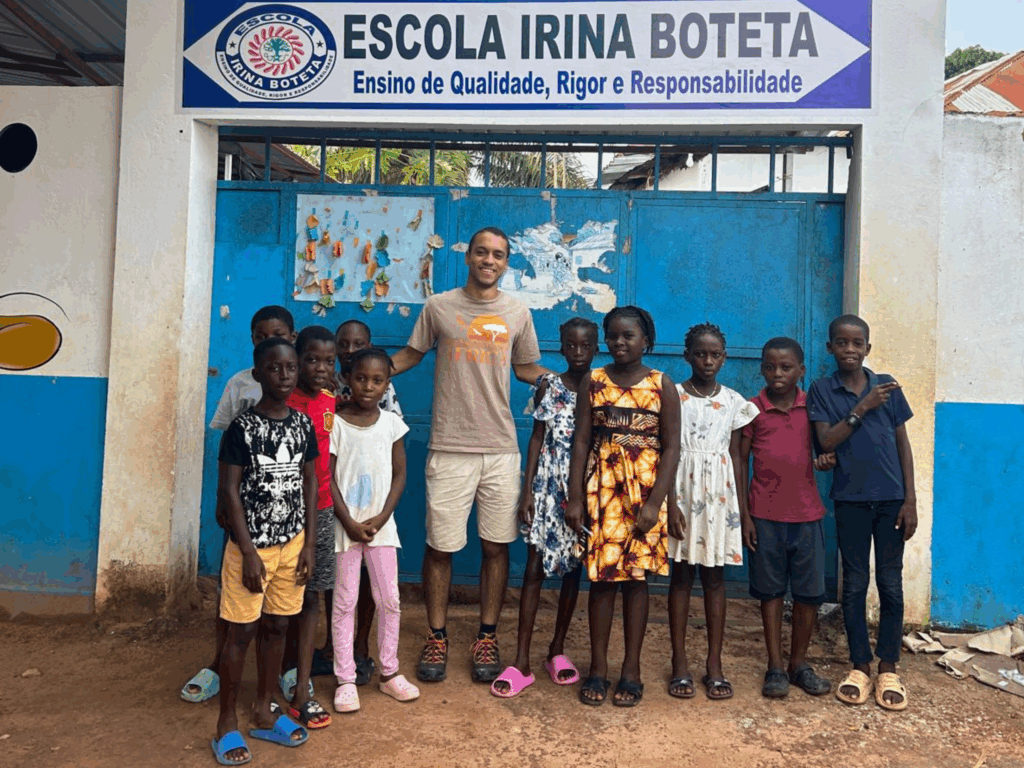
(Mamadu) We’re making a difference through the Irina Boteta School. Over 100 kids attend for free because we know they come from really poor families. Our biggest hope is that the government invests in building schools in every community across Guinea-Bissau, so all children can have free, quality education.
Would you like to share some achievements of Associação Protege?
(Mamadu) We’ve managed to help over 800 girls under 15 who were victims or at risk of early marriage. We keep working in different communities. We’ve been active in the Cacheu region, especially in Bigene and Ingoré, running awareness campaigns against harmful practices like domestic violence, sexual abuse, human trafficking, girls dropping out of school, and female genital mutilation, all things that push many girls away from education.
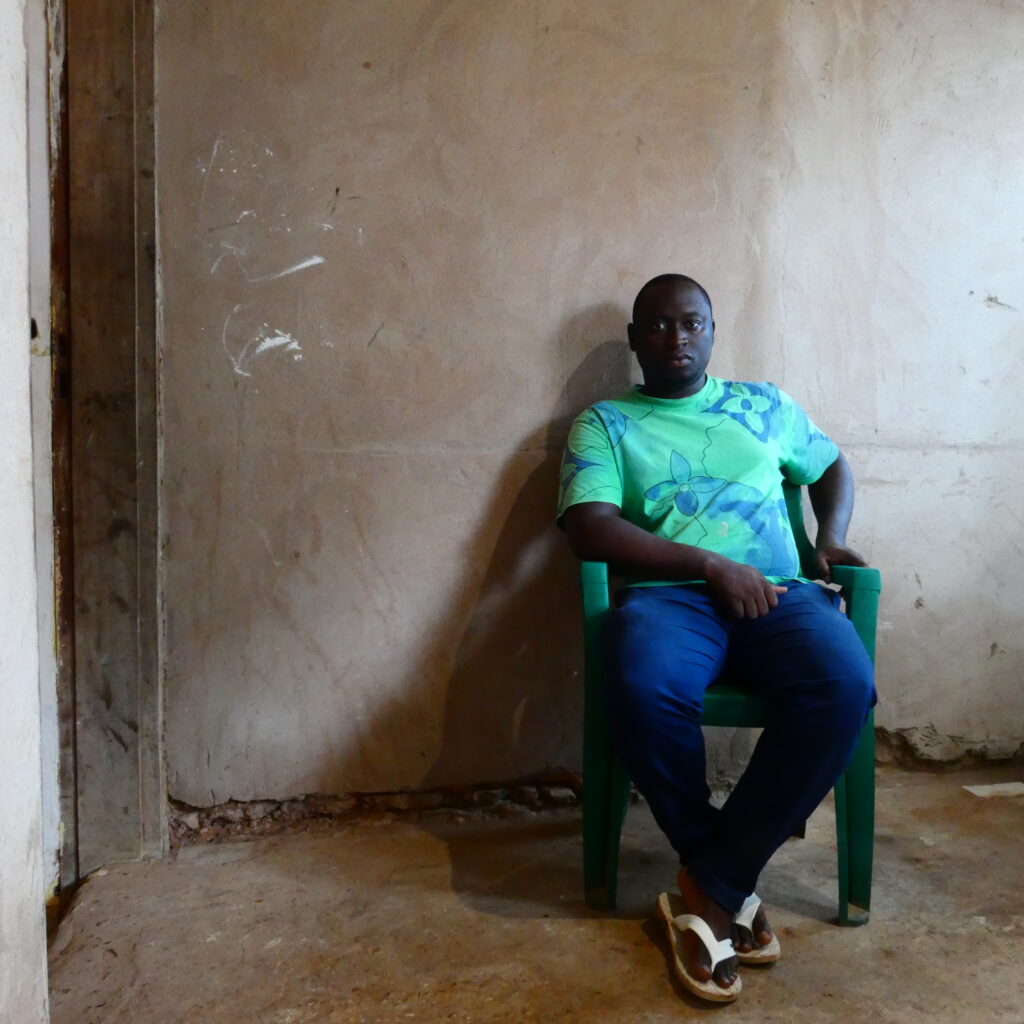
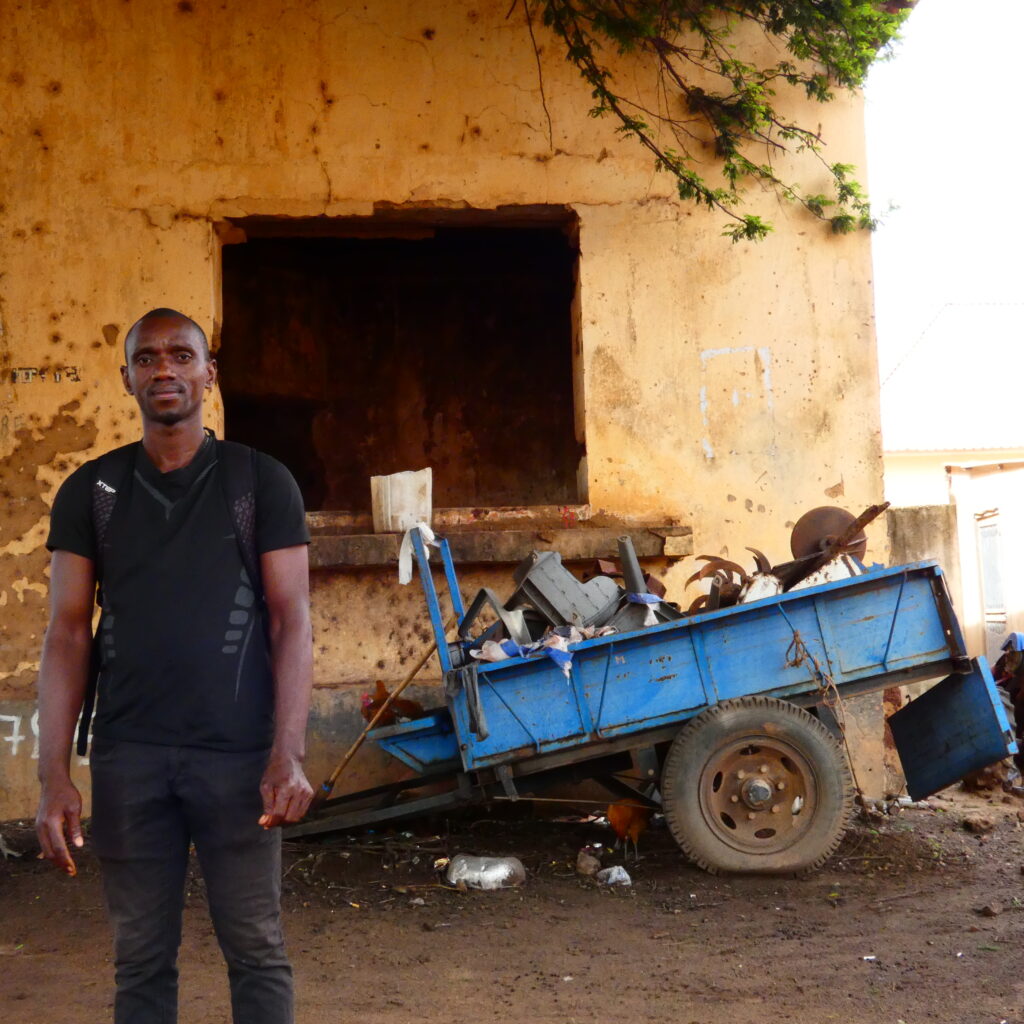
True Story: The Remarkable Story of Malam
This story is true. Out of respect for the person involved, their name and the organisations mentioned have been changed. Everything else is real, and the story is being shared with the person’s consent.
Condemned for existing
Before he was even born, Malam’s life was already doomed. When his mother found out she was pregnant, his father insisted they visit a witch. She told them that the baby, although appearing human, would actually be a monster or a snake. The father made a decision: as soon as the baby was born, he would be abandoned. Malam was left by a river as a newborn. A woman found him and took him in, but Malam’s grandmother tracked him down and demanded the child be returned to his father. That was the beginning of years and years of indescribable suffering.
A Childhood marked by violence
His father and stepmother subjected him to physical and psychological abuse. He was chained up, beaten, and forced to work from a very young age. They wouldn’t let him play, made him relieve himself while chained, and fed him only three pieces of bread a day. Hunger drove him to search for food in the trash. He was beaten by the police, who were paid by his own father. Even today, he still carries visible scars on his body.
But amid all the pain, Malam had a dream: to study. Every day, he walked 11 km from home to school. A woman secretly gave him food, but whenever his father found out, he was beaten again.
The escape to reunite with his mother
At 16, he decided to run away to find his mother. He knew where she lived and took only a photo of her. He hitchhiked with strangers, faced hunger and fever, but finally arrived. When he found her, he showed her the photo. She was moved when she heard what his father and stepmother had done to him and told him to stay, but he refused, saying, “I have something to do.” At 17, he turned all the pain he had endured into a mission: to found an organization that protects kids like him. That’s how Cuidar Foundation was born, dedicated to protecting children who are victims of abuse, early and forced marriages, maltreatment, and violations. fundar uma organização que protegesse crianças como ele. Assim nasceu a Fundação Cuidar, dedicada à proteção de crianças vítimas de abusos, casamentos precoces e forçados, maus-tratos e violações.
The building of a dream
One day, Malam met a woman named Flora Simbá carrying a bag that appeared to be heavy. He helped her, and as they walked, they talked. Upon hearing his story, Flora decided to donate 300 euros to help him. With that amount, Malam began, on his own, the construction of a school. Today, that school is still running and has already impacted thousands of children in Guinea-Bissau, offering many of them free education.
"Evil is not fought with more evil"
Malam has every reason to hate everything and everyone, to be angry at all and everyone, to feel outrage at everything and everyone. But he didn’t: he chose a different path. When I asked him, “Don’t you hate your father? Don’t you hate this world?” he told me, “No. I don’t hate anyone. Evil can’t be fought with more evil.” It’s people like him we need, human beings like this who we’re missing. Those who, even after going through everything and then some, choose to change the world for the better. Nelson Mandela, Martin Luther King, Mahatma Gandhi, Malala Yousafzai, Malam, and so many others, so many essential ones we must never forget, never hate.
Every day, hundreds of thousands of children suffer abuse and mistreatment. Silence is complicit, and indifference can kill or scar a child forever.
To all of you who have suffered: be fighters, fight to overcome evil with good, to fight hatred with love. As Malam says: “Evil is not fought with more evil.” You will always be the heroes.


